
The Straight Dope Show delivers the ultimate antidote to our modern, manufactured culture. We are currently navigating an era of unprecedented artifice. In the modern information economy, our daily discourse is meticulously curated by algorithms, our sporting events are heavily sanitized by corporate sponsors, and our entertainment is driven by focus groups rather than authentic human expression.
The promise of the digital podcasting revolution was that it would provide an unvarnished alternative to this highly manicured mainstream media landscape. Yet, as the industry has matured, most platforms have simply adopted the same cautious, public-relations-approved vernacular as the television networks they were meant to replace.
To find a genuinely disruptive voice in today’s media climate requires looking beyond the algorithmically generated top-ten lists. It requires tuning into the Rock Da Crowd TV network, where The Straight Dope Show continues to operate as a vital, uncompromising sociological autopsy of American culture.
Hosted by the fiercely analytical duo El Uno and TraB the Wonder, the podcast functions not merely as entertainment, but as a necessary check on the absurdity of modern life. In their latest Appetizer installment (Episodes 368 and 369), the hosts deliver a sweeping, unfiltered critique that moves seamlessly from the performative nature of internet food trends to the deeply entrenched biases of the American sports media complex.
he Straight Dope Show Appetizer ep.368 & 369
The Absurdity of Performative Consumption
The episode begins with a humorous, yet incisive, examination of modern internet cooking trends. In a society obsessed with viral content, the simple act of preparing a meal has been transformed into a bizarre, performative science experiment. The hosts specifically target a viral trend in which a creator “deconstructs” a Snickers bar—melting it down to achieve the perfect char—simply to create a root beer float.
El Uno and TraB rightly identify this as an unnecessary complication of basic existence, jokingly referring to it as “big back energy”. They contrast this exhausting performative culinary culture with the beauty of simplicity. El Uno proudly shares his own triumph: a straightforward, five-ingredient peanut butter cookie recipe utilizing just one cup of peanut butter, a half-cup of regular sugar, a half-cup of brown sugar, a teaspoon of baking soda, and an egg.
The message beneath the banter is clear: we have become a culture so desperate for visual engagement that we are over complicating our most basic joys, forgetting that the most satisfying results often come from stripping away the excess.
The Architecture of Sports Marketing
The hosts transition this critique of manufactured hype directly into the realm of professional sports, offering a brilliant deconstruction of modern athletic marketing. We live in a society that readily puppets the advertising slogans handed to us by major corporations.
The hosts use the moniker “King James” as a prime example. Before LeBron James had ever won a championship—before he had even stepped onto a professional court—he was branded a “King”. This was not a title bestowed upon him by the public; it was a calculated marketing campaign designed to sell shoes.
TraB draws a fascinating parallel between sports marketing and the promotion of children’s franchises like the Power Rangers and Teenage Mutant Ninja Turtles. These properties were elevated to legendary status not necessarily because they were profound works of art, but because powerful business entities recognized their financial potential and flooded the market with toys, movies, and merchandise.
The Straight Dope Show applies this exact same lens to the current explosion of the WNBA. While the hosts are supportive of the league’s growth, they correctly point out that the recent surge in media attention is not a sudden moral awakening; it is the result of the “powers that be” finally realizing that the league, spearheaded by marketable stars like Caitlin Clark, can now generate massive corporate revenue.
The Corporate Illusion of the NFL
The podcast’s willingness to expose institutional hypocrisy is perhaps most evident in its analysis of the National Football League. Fans are sold the illusion that the NFL is a pure meritocracy—a league where the best players play and the sole objective is to win games. El Uno and TraB dismantle this myth entirely.
They argue that front offices frequently prioritize keeping up appearances and justifying massive financial investments over fielding the best possible team. The hosts contrast the situations of quarterbacks Deshaun Watson and Jameis Winston.
Despite Watson’s struggles and the apparent disconnect with his teammates, he continued to start because of his staggering $45 million-a-year contract. Conversely, Winston—described by the hosts as a consummate professional who inspires his team and believes they must “succeed together or fail together”—is frequently relegated to the bench.
Furthermore, the hosts take aim at overrated NFL coaches who continually underperform despite possessing elite, top-tier rosters. They point out the systemic failure of coaches who overthink the flow of the game—passing when they should run, and calling failed trick plays—ultimately wasting the prime years of talented athletes.
The Unapologetic Excellence of Coach Prime
The most powerful segment of the broadcast centers on the sports media’s relentless, thinly veiled hostility toward Deion “Prime Time” Sanders and the Colorado Buffaloes. The Straight Dope Show highlights how the traditional media establishment constantly roots for the program’s failure.
At the start of the season, Colorado played out-of-conference games where they were effectively paid to show up and lose. When the Buffaloes defied expectations and won, the media was noticeably silent, refusing to celebrate their success. The hosts point out the glaring omission of Colorado’s star players, quarterback Shedeur Sanders and two-way phenom Travis Hunter, from serious Heisman Trophy conversations, despite their undeniably elite performances. If they were playing for a traditional coach at a traditional program, the hosts argue, they would be universally celebrated as “gamers”.
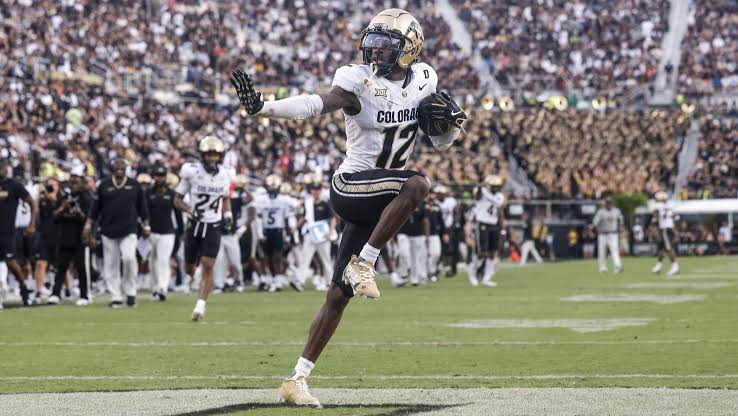
El Uno and TraB correctly diagnose the root of this media bias: the establishment is terrified of unapologetic Black excellence. Deion Sanders refuses to perform the quiet, submissive humility that the media demands of its athletes. As the hosts brilliantly articulate, the very nature of football requires supreme confidence and aggression; to ask a professional athlete to be “humble” is to ask them to artificially dim their light to make the establishment feel more comfortable. Sanders and his players know their worth, and they refuse to depend on the traditional media gatekeepers for validation.
Tune In to the Revolution
In a media landscape drowning in safe, PR-approved talking points, we desperately need voices willing to point out that the emperor has no clothes. The Straight Dope Show is not merely a podcast; it is a vital, ongoing argument for intellectual independence and cultural authenticity. El Uno and TraB the Wonder are doing the unglamorous, necessary work of holding our institutions accountable.
If you are tired of having your cultural opinions handed to you by a boardroom, it is time to upgrade your media diet. Take back the narrative. Visit RockDaCrowdTV.com or download the Rock Da Crowd TV app today, available on Roku, Apple, and Android, and stream the Appetizer editions of The Straight Dope Show.